Latest posts and frequently asked questions about aluminum
On this page you will find the most common questions about aluminum production and their answers. First, you can browse the question list below. In addition, the end of the page shows our latest posts on LinkedIn. As a result, you can reach information on extrusion, anodizing, powder coating, mechanical operations, casting and packaging in one place.
Do you have questions?
Here is a list of frequently asked questions to help you understand how aluminum plants work.
Alloys and Casting
How many stages is heat treatment hardening performed in aluminum alloys?
The hardening of the aluminum alloy by heat treatment occurs in 4 stages.
- The process of heating up to a predetermined temperature.
- Solution taking process.
- The process of quenching quickly to a low temperature.
- Aging or precipitation hardening.
What is aluminum permanent mold casting?
- Aluminum permanent mold casting; It is an aluminum casting method that is cast into iron or steel alloy molds.
- The mold consists of two parts, a minimum lower and upper mold.
- Iron and steel alloy materials are not cast in permanent mold casting.
- Aluminum material, on the other hand, does not interact with the mold as it melts at 660°C. This makes aluminum metal the most commonly cast material in permanent die casting molds.
- The rapid freezing of the material in the aluminum permanent mold casting mold allows us to produce a lot in a short time.
- In the aluminum permanent mold casting method, before casting, the mold is heated to a certain temperature, paint is poured into the mold and the mold becomes ready for casting.
Why are aluminum alloys preferred?
- Aluminum with a specific gravity of 2.7 g/cm3; It is one third as heavy as iron (7.9 gr/cm3) and copper (8.9 gr/cm3).
- When aluminum comes into contact with air, a thin oxide film forms on its surface and in this way the metal is protected from corrosion. In addition, with the help of anodization (anodization), corrosion resistance can be made much more effective.
- Easy shaping of aluminum makes the material suitable for production for various forms such as foil, rod, pipe and cable.
- Aluminum is non-toxic and odorless. Its surface is smooth, easily washable and hygienic as it does not contain germs.
- While materials such as steel are brittle at low temperatures, aluminum maintains its strong structure.
- Aluminum can be easily surface treated or painted chemically or electrochemically.
- The electrical conductivity of aluminum is 60% of that of copper.
- The thermal conductivity of aluminum is three times the thermal conductivity of steel.
- Aluminum can be easily recycled. Also low melting
Due to the temperature of the process, the process takes place economically. - Aluminum is not magnetic.
What is the difference between T5 and T6 temper?
- T5: The profile is cooled with air or water as it leaves the press and is then artificially aged in an oven.
- T6: The profile is quenched rapidly from solution temperature and then artificially aged. It therefore usually gives higher strength.
- T5 is enough for most architectural profiles, while T6 is preferred for structural and load-carrying parts.
- The temper also affects later steps such as bending and machining.
Why is aluminum recycling important?
- Aluminum can be remelted again and again without losing its properties.
- Production from scrap needs far less energy than production from ore, so it lowers both cost and carbon footprint.
- However, scrap has to be sorted by alloy group, because excess iron, copper or zinc cannot be removed easily from the melt.
- Painted and oily scrap also has to be prepared before melting; otherwise dross loss increases.
What is the difference between 6063 and 6082 alloy?
- 6063 offers high surface quality and easy extrusion, so it is the basic alloy of architectural profiles.
- 6082 contains more silicon and manganese and gives clearly higher strength.
- In contrast, 6082 is harder to extrude and less suitable for complex, thin-walled sections.
- 6063 gives a more uniform appearance after anodizing.
- In short, 6063 is preferred when appearance comes first, 6082 when load-bearing comes first.
What is degassing and why is it done?
- Liquid aluminum dissolves hydrogen that comes from moisture.
- During solidification this gas is released and forms porosity in the billet.
- In degassing, inert gas is fed into the melt through a rotating rotor; the bubbles carry hydrogen to the surface.
- As a result, the risk of blisters and surface defects on the profile falls.
- The treatment also helps oxide inclusions rise to the surface.
What is dross and how is it reduced?
- Dross is the mixture of oxide and metal that forms on the metal surface during melting.
- Fine chips and painted or oily scrap increase the amount of dross.
- Scrap should therefore be charged clean, dry and, if possible, compacted.
- Furnace temperature should not be higher than necessary and the melt should not be stirred needlessly.
- Dross still contains metal; it can be recovered by pressing or by specialised companies.
How is the charge mix planned when preparing a casting charge?
- First, the chemical composition ranges of the target alloy and the analyses of the inputs to be used are determined.
- The charge calculation is made by evaluating primary metal, suitable scrap and alloy elements together.
- Adjustment is made according to the analysis of the representative sample taken after melting; decisions are not based on a theoretical mix calculation alone.
What is the function of a ceramic filter in aluminum melt?
- The ceramic filter helps retain a portion of the oxides and other solid inclusions in the liquid metal.
- Filter selection is made according to metal flow rate, alloy, contamination load and casting arrangement.
- Filtration does not replace correct melting and degassing practices; it completes them.
How do oxide inclusions in casting affect product quality?
- Oxides on the melt surface being dragged into the liquid metal can lead to internal defects.
- These defects can negatively affect mechanical performance, machinability and the surface quality of the finished product.
- Reducing turbulence during metal transfer, a clean charge and proper filtration should be considered together.
How should a sample be prepared for spectrometer analysis?
- The sample should be taken from a point that represents the melt, using a suitable sampling method.
- The analysis surface must be clean, flat and prepared in line with the instrument’s method.
- Instrument calibration and reference sample checks should be monitored; suspect results should be re-measured.
What is the low-pressure test useful for in assessing casting quality?
- A sample solidified under low pressure provides comparative information about the melt’s gas and porosity tendency.
- The result is influenced by sample temperature, the vacuum applied and the test method.
- It should not be used on its own as an exact hydrogen measurement or as an indicator of all casting defects.
How is the effect of Fe used in aluminum alloys on the surface brightness?
In 6XXX series alloys with an iron (Fe) content of 0.20% or less, a glossy surface is obtained when the profile is polished. If the amount of Fe is higher than this value, the color of the profile starts to turn gray and the gloss becomes dull. Fe content should be at least 0.18% to obtain a matt surface. The higher the amount of Fe, the more comfortable and attractive matte surface is obtained. If the amount of Fe is more than 0.30%, it will cause a dull appearance after anodizing, and it also makes the extrusion process difficult.
How are aluminum alloys classified according to their chemical structure?
Various metals are mixed to give aluminum different properties. Classification is made according to the added metals. An alloy is identified by a 4-digit code. The first digit indicates the base metal to which aluminum has been added.
1XXX : Unalloyed aluminum,
2XXX : Aluminum alloy with copper,
3XXX : Manganese aluminum alloy,
4XXX : Aluminium alloy with silicon,
5XXX : Aluminum alloy with magnesium,
6XXX : Aluminium alloy with silicon and magnesium,
7XXX : Aluminum alloy with zinc,
8XXX : Aluminum alloy with Iron and Silicon,
9XXX : Newly found alloys.
Which aluminum alloys are most common?
- 6060 / 6063: High surface quality; very suitable for anodizing and powder coating. The standard alloy for door, window and facade systems.
- 6061 and 6082: Higher mechanical strength. Preferred in machinery, load-bearing structures and industrial applications.
- 6005A: A balance between strength and extrudability; common in automation and system profiles.
- 7075: Very high strength; used in technical projects such as aerospace and defence.
- 5083: Resistant to sea water; stands out in marine use and welded fabrication.
- In short, the right alloy is chosen according to load, environment and the surface quality required.
What is homogenising and why is it done?
- Homogenising means holding the cast billet at high temperature for a set time and then cooling it in a controlled way.
- It removes the composition differences left from casting and arranges the internal structure.
- As a result, the billet flows more easily in the press and allows higher speed and better surface quality.
- A billet that is not homogenised, or is cooled incorrectly, raises the risk of tearing, lines and streaking after anodizing.
Which factors decide billet quality?
- Chemical composition: Alloying elements must be within the limits of the standard.
- Melt cleanliness: Degassing and filtration reduce hydrogen and oxide inclusions.
- Grain structure: Grain refiner gives a fine and uniform structure.
- Casting conditions: Casting speed, water flow and metal temperature must stay constant.
- Homogenising and cooling: They directly decide the extrudability of the billet and the surface quality of the profile.
What is the role of magnesium and silicon in aluminum alloys?
- In 6000 series alloys, magnesium and silicon together form a hardening phase.
- During ageing this phase precipitates as fine particles in the structure and raises strength.
- As the contents rise, strength increases, but extrudability and press speed fall.
- Unbalanced ratios can also harm surface quality and the anodized look.
- For this reason the composition is checked with a spectrometer on every cast.
What is grain refining?
- Grain refining means adding grain refiner rod to the melt before casting.
- The addition creates many nuclei during solidification and gives a fine, uniform grain structure.
- A fine-grained billet cracks less in casting and flows more evenly in the press.
- The surface also looks more uniform after anodizing.
- However, the amount has to be controlled; too much raises cost and can leave residues.
What is the difference between primary and secondary aluminum?
- Primary aluminum is produced by electrolysis of alumina obtained from bauxite ore.
- Secondary aluminum is obtained by remelting scrap.
- Secondary production uses far less energy, so its carbon footprint is low.
- In contrast, elements such as iron and copper in scrap make composition control more difficult.
- With correct sorting and melt cleaning, secondary metal can give the same profile quality as primary metal.
What is the difference between metal yield and scrap ratio?
- Metal yield shows the ratio of usable metal output to metal input in a defined process.
- The scrap ratio, on the other hand, tracks the amount of product that is non-conforming or will be reworked in production.
- The two indicators are not the same; the calculation boundaries for dross, cut-off ends and internal returns must be clearly defined.
Why should internal production scrap be separated by alloy?
- Mixing different alloys makes it difficult to maintain the target chemical composition.
- Inputs contaminated with oil, paint or foreign metals should be evaluated separately.
- Returns separated by alloy and batch information improve charge calculation and traceability.
What information does macrostructure examination of billets provide?
- Properly prepared sections reveal information about grain structure, segregation and certain casting discontinuities.
- The section location and examination method are determined according to the intended use of the product.
- Results should be interpreted together with chemical analysis and other quality checks.
How is the billet end-cut amount determined?
- At the start and end regions, structure or surface properties different from the stable part of the casting may occur.
- The cut amount should be verified by casting method, billet diameter and quality examinations.
- Too little cutting increases defect risk, while too much cutting increases metal loss.
Which records are required to release a casting heat?
- Alloy analysis, casting parameters, billet identity and the quality checks performed are evaluated together.
- Acceptance criteria must be defined in advance in the product specification and the plant’s quality plan.
- A non-conforming heat must not be mixed with conforming products before an approved evaluation is made.
Extrusion and Heat Treatment
What is the dead time in extrusion presses? How is it calculated?
One of the most important factors in manufacturing efficiency in extrusion presses is dead time. Dead time is defined as the time remaining outside the time when the billet turns into profile during the production of the press. In other words, it can be described as the time that passes during the execution of auxiliary movements.
In the calculation of the dead time, the measurement starts when the previous print is finished, that is, when the pressure drops to zero. The measurement is terminated when the next billet is loaded into the hive, completing the venting process and reaching the maximum pressure. The value read is expressed as the dead time of the press.
What is the extrusion speed? How is it calculated?
Although it does not have a clear definition in the literature, it is the process of converting the raw material to profile per unit time. Generally, it is calculated with 4 different methods. These ;
- By measuring the punch speed per unit time (mm / sec).
- By measuring the profile speed (m / min) per unit time.
- By measuring the amount of net production (kg / h) achieved per unit time.
- It is calculated by measuring the amount of gross raw material (kg / h) consumed per unit time.
What is extrusion die? According to what is it classified?
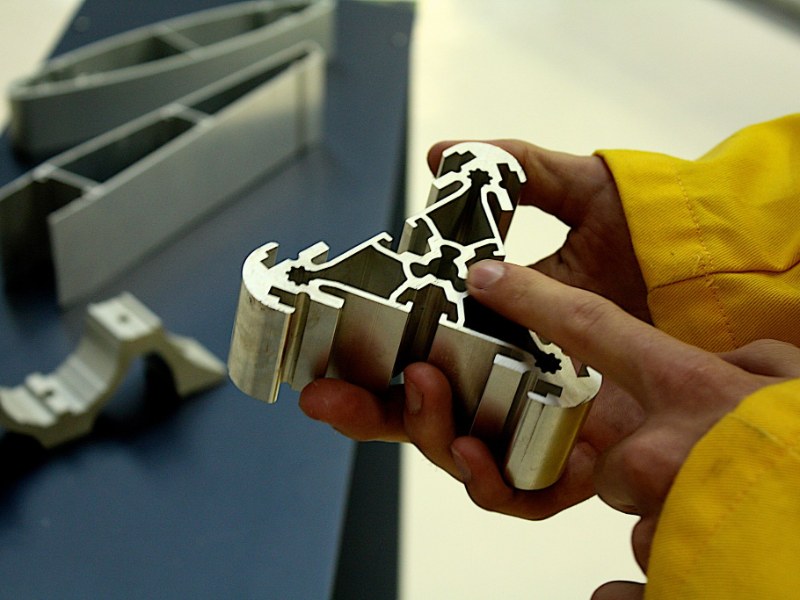
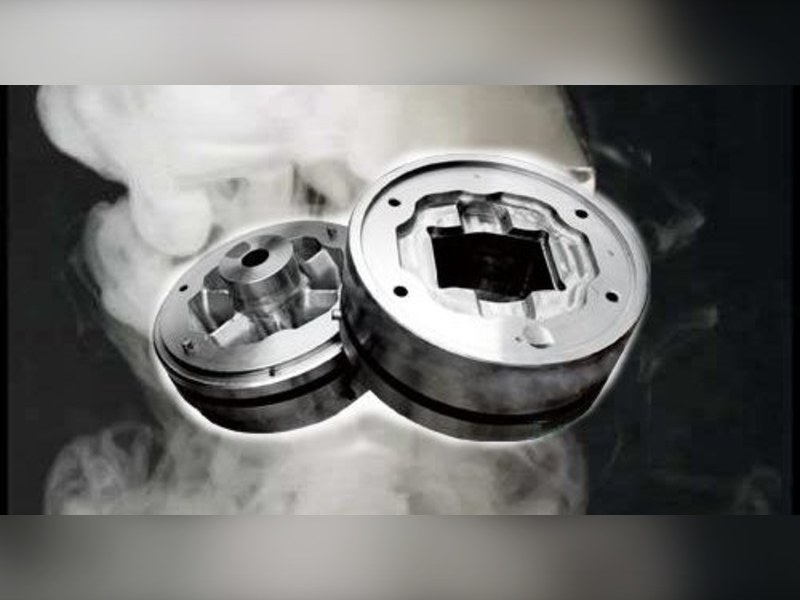
It is the equipment used to obtain the desired cross-sectioned product during the extrusion process. There are two main types of dies. These;
- Solid dies.
- Bridge dies.
What is extrusion? How many types of extrusion methods are there?
It is the process of shaping the metal placed in the mold, which is produced depending on the desired shape, by forcing it to flow with high compression force. It can be compared to squeezing toothpaste from a toothpaste tube. Basically, there are 2 different extrusion methods. These;
- Direct Extrusion
- Indirect Extrusion
What are the purposes of die preheating?
The main purposes of preheating the dies before the extrusion process are as follows.
- Extension of die life.
- Ensuring flow balance and reducing the amount of scrap.
- Preventing the billet from sticking to the die surfaces.
What are the main causes of surface line defect on aluminum profiles?
One of the defects that occur on the surfaces of aluminum profiles after the extrusion process is the surface lines. The main reasons for the related error are as follows.
- Die surface defects caused by Wire Erosion Cutting.
- Cutting tool traces in the die pre-pool.
- Incorrect pass length.
- Improper nitration.
- High billet temperatures.
- Improper printing speed.
- Surface defects inside the hive (core).
- Not using homogeneous raw materials (billet).
- Faulty graphite material used in the exit stand.
- Unsuitable transfer belts.
- Inappropriate intermediate (stock) distance.
In the aluminum extrusion process, according to which parameters is the heating temperature of the billets determined?
- The cross-sectional shape of the profile to be produced,
- Extrusion rate,
- The type of extrusion die,
- The force required for extrusion (power of the press),
- The desired mechanical properties of the product,
- The desired surface quality of the product.
What are the aluminum extrusion process steps?
- Aluminum billets are heated up to 400 – 500 °C.
- After the billet reaches the desired temperature, the lubricant is transferred on it as a thin film. It will prevent the die and material from sticking together due to heat.
- The ticket is transferred to the carrier.
- Billet logs are pushed.
- Aluminum billet billets, which are larger than the die, are crushed by the opposite die while in full contact with the load-bearing walls. As the aluminum is pushed through the die, liquid nitrogen flows around the die to cool the process.
- In some cases, nitrogen gas is used instead of liquid nitrogen.
- As a result of the pressure, the billet starts to come out by being squeezed out of the cavity of the aluminum die.
- During the extrusion process, the temperature is instantly measured and recorded. The purpose of knowing the temperature is to be able to maintain maximum pressure velocities.
- During the drawing of the extrusion, the extrusion outlet is done by a series of fans along the cooling length.
- The oxidized part on the billet log is discarded.
When the extrusion reaches the desired length, the extrusion profile is cut with the help of a saw. - The metal is transferred on the cooling table.
- After the aluminum is moved along the table and cooled, the aluminum is subjected to hardening and alignment processes.
- The extrusion is transferred to a stretched saw blade and cut into certain lengths.
How is aluminum profile size control done?
- During the extrusion production of the profile, a sample piece is cut with a saw.
- Cut part burrs are cleaned.
- The profile surface is scanned with the scanning device.
- The measurement is compared with the profile technical picture in the device memory.
- Weight control is done on sensitive scales.
- In this way, deviations in the profile and thickness measurements can be made easily.
How is the Ideal Cooling Rate Determined in Aluminum Profile Production?
In aluminum profile manufacturing, the cooling process after extrusion is a critical stage that directly affects the profile’s mechanical properties (tensile strength, yield limit, hardness). The cooling rate determines the alloy’s microstructure and thus its final performance. So how is the ideal cooling rate selected?
If aluminum is not cooled rapidly after extrusion, alloying elements (such as Mg, Si) may diffuse slowly and form undesirable phases. This reduces mechanical strength and leads to a soft structure. On the other hand, excessively rapid cooling (especially in thick sections) can cause internal stresses or profile deformation. Key factors for the ideal cooling rate include the following:
🚶♂️➡️ Alloy Type:
👉👉👉 6xxx Series (e.g., 6061, 6063): These magnesium-silicon alloys require rapid cooling with water or air. Water spray cooling at rates above 100°C per second optimizes the solution heat treatment process, providing high strength in the T6 temper.
👉👉👉 7xxx Series: These alloys, used for higher strength, are processed with controlled water cooling.
🚶♂️➡️ Profile Thickness:
👉👉👉 Thin sections (e.g., below 3 mm) can be cooled rapidly, while thick sections (above 10 mm) require reduced cooling speeds to minimize the internal-external temperature gradient.
🚶♂️➡️ Product Application:
👉👉👉 Water cooling is preferred for structural applications where high strength is critical.
👉👉👉 Gradual air cooling is more suitable for architectural profiles requiring low internal stress.
Recommended aluminum cooling rates and methods
🚶♂️➡️ Recommended Cooling Rates (6xxx Alloys):
👉👉👉 Rapid Water Cooling: ~100–300°C/minute (ideal for T6 temper).
👉👉👉 Air Cooling: ~10–50°C/minute (sufficient for T5 temper, but with lower strength).
👉👉👉 Thick Profiles: The cooling rate should be adjusted gradually to reduce thermal shock risk.
🚶♂️➡️ Cooling Methods and Technologies:
👉👉👉 Water Spray Systems: Effective for high-speed cooling but require precise control to avoid warping.
👉👉👉 Air Cooling Units: Provide homogeneous cooling and reduce internal stress.
👉👉👉 Controlled Atmosphere Cooling: Balances the temperature curve, especially for profiles with critical tolerances.
The ideal cooling rate should be optimized based on alloy chemistry, profile geometry, and product requirements. In practice, cooling parameters can be simulated through laboratory tests and finite element analysis to minimize the margin of error. Proper cooling not only maximizes mechanical properties but also reduces scrap rates.
What is an ageing oven and how does it work?
- The ageing oven is the heat treatment oven that gives the profile its final hardness.
- Profiles are loaded in baskets and held at a set temperature for a set time.
- During this time the alloying elements precipitate as fine particles and strength rises.
- Tightly packed baskets block air circulation, so profiles in the middle heat up late.
- Temperature distribution in the oven should therefore be measured regularly and hardness checked on every basket.
Why is press exit temperature measured?
- Exit temperature is one of the most important values, showing both surface quality and mechanical properties.
- If it is low, the alloying elements do not go into solution and target hardness is not reached.
- If it is high, tearing and roughness appear on the surface.
- As press speed rises, exit temperature rises too because of friction.
- The operator therefore monitors temperature continuously and adjusts speed accordingly.
What does the bearing area do in an extrusion die?
- The bearing is the working surface where metal exits the die and it helps balance the metal flow.
- Its length and geometry depend on the profile cross-section, the alloy and the flow conditions.
- In case of unbalanced flow, the die design and wear should be examined rather than only changing press speed.
How is the weld seam formed in porthole dies evaluated?
- In porthole dies, the separated metal streams merge again in the welding chamber.
- Joining quality is affected by die design, temperature, pressure and process stability.
- Acceptance must be verified with inspections and tests appropriate to the product’s use, and must not be given based on appearance alone.
What are the main causes of twist in a profile?
- Unbalanced metal flow within the cross-section, asymmetric cooling and guiding conditions along the line can contribute to twist.
- Die condition, puller settings and profile support should be checked together.
- If straightening will be applied, product tolerances and deformation limits must be taken into account.
How does die stretch affect profile dimensions?
- Under extrusion pressure, elastic shape change can occur in the die and support elements.
- This change can contribute to dimensional deviations, especially in thin-walled and complex cross-sections.
- Die design, the support set, temperature and operating conditions should be evaluated together.
What is the role of the puller in extrusion?
- The puller helps the exiting profile progress along the line in a controlled way and be guided smoothly.
- Pull force and speed matching are adjusted according to the profile cross-section and line conditions.
- Excessive pulling or speed mismatch can cause shape distortion and surface damage.
What is the extrusion rate? How is it calculated?
It is the ratio between the billet area used in the extrusion process and the cross-sectional area of the profile obtained. Start with a phrase;
Extrusion Rate = Billet area / Profile area
When the extrusion rate is low, little mechanical work will be done on the portions of the shape containing the largest metal mass. Its metallurgical structure will approach the casting (coarse grained) state. This structure is mechanically weak. Shapes with less than 10 extrusion rates may not be guaranteed for mechanical properties.
The opposite is the case when the extrusion rate is high. More pressure is required to push the metal through smaller openings in the die and excessive friction occurs. Normally acceptable extrusion rates are limited to 35 for hard alloys and 100 for soft alloys. The normal extrusion rate range is 10 to 35 for hard alloys and 10 to 100 for soft alloys.
These limits should not be considered absolute, as the actual shape of the extrusion can affect the results. The higher the extrusion rate, the more difficult the part will be to extrud as a result of the increased resistance to metal flow. Maximum pressure is required for the extrusion of hard alloys.
What is die annealing? What non-conformities does it cause?
It is the heating of the molds before the extrusion process. The respective temperature should be 50-60 degrees below the solubilization value. Some inconveniences caused by low mold temperatures are as follows.
- It causes mold clogging.
- If the die is cold, aluminum does not flow. Continued printing causes the pressure to rise, resulting in the die breaking.
- Profile size deviations occur in filled profiles.
- It creates inefficiency due to the prolongation of production time.
- Surface quality will be low.
- It causes the oil temperature to increase and equipment damage. Therefore, it causes oil leakage.
- It causes a decrease in printing speed, cooling defects, and therefore not achieving the desired hardness in thermal process.
How are heat treatment applications classified in aluminum alloys?
Heat treatment applied to aluminum alloys can be applied in different ways and the applied process is written next to the alloy number with TX symbols. These operations are expressed as follows:
O: Annealed, F: As produced, H: Hardened, T: Heat treated.
• T1: Cooled after hot shaping process and left to naturally age.
• T2: Cooled after hot forming, cold formed and naturally aged.
• T3: Solution taken, cold formed and left to naturally age.
• T4: The solution was taken and naturally left to age.
• T5: Cooled after hot shaping and artificially aged.
• T6: Solution treatment has been done and artificial aging has been done.
• T7: Solution was taken and over-aged.
• T8: Solution treated, cold formed and artificial aging.
• T9: Solution treated, artificially aged and cold formed.
• T10: Cooled after hot forming, cold formed and artificial aging.
What is a bubble? What are the main reasons?
It is one of the types of errors that occur during the extrusion process. It is the general definition given to the defects seen as air gaps on the product obtained. The main reasons are as follows.
- Lack of bleeding system or bleeding at wrong pressure.
- Part billet usage.
- The hive temperature is not suitable.
- Billet temperature is not suitable.
- Failure to clean oxide, oil and metal residues accumulated in the hive.
- The amount of search is not ideal length.
- Excessive lubrication of the cutting blade, punch, sleeve at the end of extrusion.
- Hot cutting process does not cut smoothly.
- Die, barrel and punch axes are not in proper position.
- The intermediate cutting blade creates air gaps by emptying the die ports.
- Incorrect dummy block design.
- Hive liner is damaged.
- There is an air gap in the raw material.
- Inappropriate die design.
What is nitration and why is it done?
After pressing in extrusion dies, abrasions occur on the die surface.
These abrasions cause roughness on the profile surfaces after extrusion. With the help of the compound layer formed after the nitration (Tenifer) process, the surface is more resistant to abrasion, reducing roughness and extending the maintenance intervals of the molds. It is made with 3-5% cyanide and 37% cyanate salts at 570-580 °C.
What are the benefits and harms of heating the billet to high temperature in the aluminum extrusion process?
Benefits;
- It simplifies the extrusion process.
Harms;
- It negatively affects the surface appearance,
- It causes the mold to wear out quickly,
- Causes roughness and lines on the product surface,
What are the benefits and harms of heating the billet to low temperature in the aluminum extrusion process?
Benefits;
- Provides good surface quality,
- It provides good mechanical values.
Damages;
- It complicates the extrusion process,
- It causes the press pressure to increase and the hydraulic oil to heat up,
- It causes damage to the mold by being under more pressure.
What information is needed when ordering aluminum extrusion profile?
- Is there a technical drawing? (must include alloy, weight, tolerance, visible surface, etc.)
- Which international standards will it be produced according to?
- What is the order size?
- What is the end-use length?
- What is the estimated annual usage amount?
- What is surface information? (pressing, powder coating, anodizing, machining, hanger trace etc.)
- What is the packing information? (form of packaging, foil etc.)
Why is die heating done in the extrusion process?
The purposes of the heating process applied to the dies in the extrusion industry are as follows.
- Reducing the risk of early die damage,
- Reducing the amount of scrap at the beginning of production where there is an unstable metal flow,
- To prevent the billet from sticking.
Why is stretching done?
- A profile leaving the press bends and twists slightly as it cools.
- The stretcher grips the profile at both ends and lengthens it in a controlled way.
- As a result, the profile is straightened and internal stresses fall.
- However, too much stretching thins the section and can take dimensions out of tolerance.
- The stretch ratio should therefore be saved in the recipe for each profile.
What are the causes of low hardness in a profile?
- Insufficient or late quenching at the press exit.
- Low press exit temperature; the alloying elements do not go fully into solution.
- Low temperature, short time or uneven temperature distribution in the ageing oven.
- Alloy composition at the lower limit.
- Very long or irregular waiting between press and oven can also affect the result.
What does monitoring the press force curve provide?
- The change in force over the stroke allows the process to be compared with previous good production runs.
- Unexpected changes may indicate differences in temperature, friction, die or charge conditions.
- The curve is not a fault diagnosis on its own; it is interpreted together with production records and measurements.
Why is speed increased in a controlled way at the start of extrusion?
- Start-up and steady-state production conditions may not be the same; an abrupt speed change can affect metal flow and exit temperature.
- The speed transition is determined according to the alloy, cross-section and the working conditions of the die.
- A proper start-up routine helps improve dimensional and surface stability in the first lengths.
Why is the support spacing on the profile run-out table important?
- A hot profile that is not sufficiently supported may deform under its own weight or due to line movement.
- The support arrangement should be chosen to suit the profile’s stiffness, temperature and cross-section geometry.
- Cleanliness of the support surfaces is also important to prevent scratches and marks.
Why is the profile temperature checked before stretching?
- Profile temperature affects the material’s deformation behaviour and the repeatability of the stretching operation.
- The stretching method and the elongation to be applied should be determined according to the alloy and the product’s quality requirements.
- Temperature and elongation records are useful for root-cause analysis when dimensional or straightness complaints arise.
How does the loading pattern in the ageing furnace affect results?
- Dense and irregular loading can change air circulation and the temperature distribution within the load.
- Different cross-sections and packing arrangements affect the time it takes the metal to reach the target temperature.
- Recipe validation should be done with representative load temperature measurements, not only with the furnace indicator.
Electrostatic Powder Coating
How to measure electrostatic powder paint gloss?
The paint gloss level to be measured with the gloss meter;
- Between 30-70 gloss, at an angle of 60 °,
- If it is above 70 gloss, at an angle of 20 °,
- If it is under 30 gloss, at an angle of 85 °,
- It is performed by using gloss measuring devices with a wider measurement range on surfaces above 200 gloss (gloss).
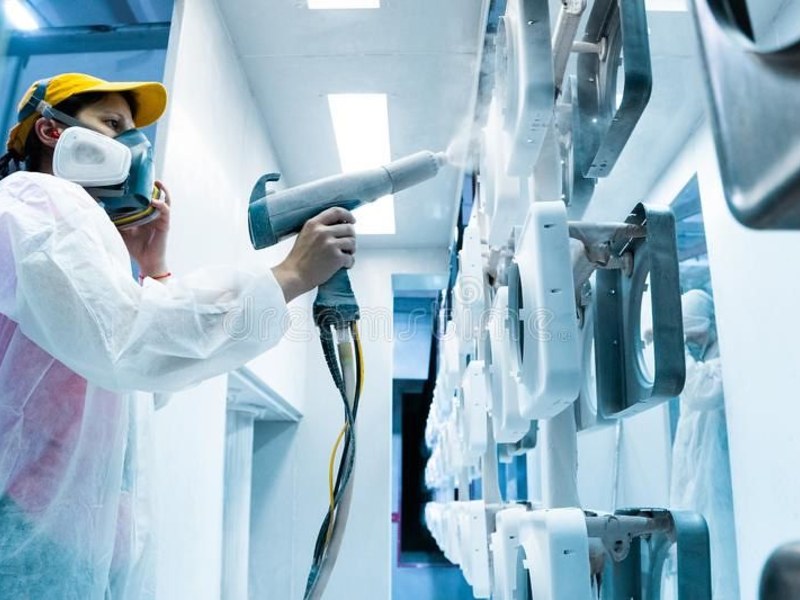
What is a powder coating? What ingredients does it contain?
It is a type of paint consisting of dry and solid raw materials. Generally in its content;
- Pigment: It has a colorant and covering function.
- Filling material: Determines the mechanical properties of powder paint by giving volume.
- Resin: It determines the basic properties of paint.
- Hardener: It reacts with the resin and determines the chemical resistance and mechanical properties of the powder paint.
- Additives: It generally determines the surface appearance.
What is chrome free passivation?
- Chrome free passivation is a type of coating that is used instead of chrome+6 in powder coating surface treatment.
- This coating, which is made before the drying oven, ensures that the powder paint and the metal adhere to each other.
- It works in the pH range of 2.5 -3.5 on average.
- The processing time is between 20-60 seconds on average.
- The drying temperature after surface treatment is 100 °C at most.
- The coating weight is required to be 3-20 mg/m2.
Why is the coating thickness low in electrostatic powder coating?
One of the biggest problems of the electrostatic powder coating process is that the coating thickness is below the desired values. Some of the main reasons for this situation are as follows.
- Spray gun voltages are incorrect.
- Since the paint hangers are not clean, they are not conductive.
- The air pressure to the spray guns is insufficient.
- There is deformation in the paint hoses.
- Powder coating grain sizes are large.
- There is no dry air in the system as the air dryer is out of order.
- There is no static current as the grounding is not done correctly.
- Powder paint has a high recycling rate.
- There is not enough paint in the powder paint hopper.
- Air puffing in the powder coating chamber is not enough.
- Cyclone absorption rate is high.
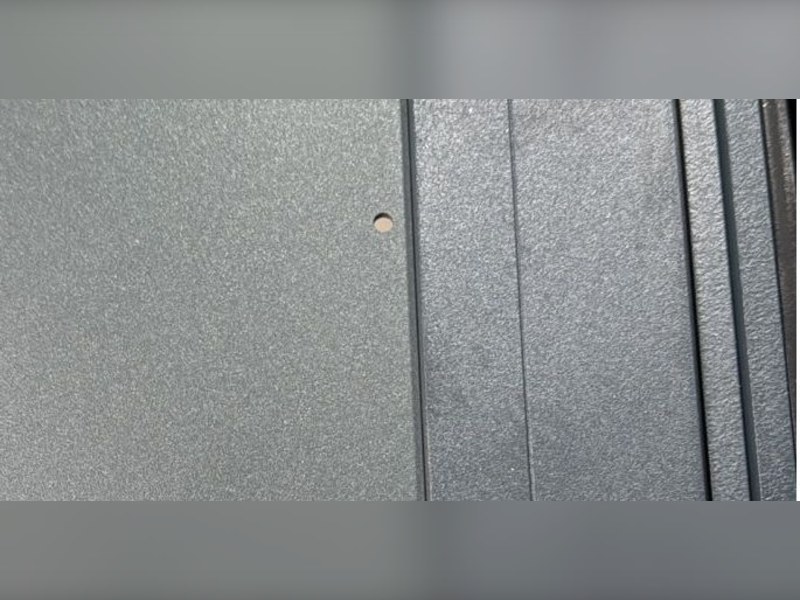
Why do shade differences occur in powder coating?
- Curing conditions: Uneven temperature in the oven, differences in temperature and time, metal thickness.
- Powder batch: Different lot numbers, the share of reclaimed powder and powder from different brands.
- Operating parameters: Differences in film thickness, gun voltage, air flow and racking.
- Profile and pretreatment: Differences in surface texture and in the amount of etching.
- Metallic and textured powders are also more prone to shade differences because they reflect light differently.
What causes the orange peel effect?
- Orange peel is a wavy, rough appearance of the paint surface.
- The most frequent cause is a film that is thicker than necessary.
- Very fast heating or incorrect curing also leaves the paint no time to flow out.
- Particle size and type of the powder and gun voltage affect the result as well.
- Film thickness, the oven temperature curve and gun settings should therefore be checked together.
What is back ionisation?
- Back ionisation is the discharge of excess electric charge on the surface through the powder layer.
- This discharge leaves craters, pinholes and a rough appearance.
- It is usually caused by high voltage, a gun too close to the profile or spraying one spot for too long.
- Lowering the voltage, limiting the current and increasing the distance reduce the problem.
- The risk is also higher on recoated parts.
How are powder coating curing temperature and time decided?
- The basic source is the technical data sheet of the powder supplier; it gives the temperature and time window.
- These values refer to the temperature of the metal, not of the oven air.
- Thick-walled profiles heat up late, so line speed or oven settings have to change with the profile.
- The real metal temperature is verified with a thermograph run.
- Under-curing lowers adhesion and durability, while over-curing causes colour and gloss deviation.
Why is grounding important on a powder coating line?
- Proper grounding supports the adhesion of the electrostatically charged powder to the part and the stability of the application.
- Paint build-up on hanger contact surfaces can weaken the electrical contact.
- Grounding checks and hanger cleaning should be carried out regularly according to the equipment manufacturer’s instructions.
Why does a crater appearance occur in powder coating?
- Oil, silicon or other surface contaminants can cause the coating to open up locally.
- Compressed air, pretreatment, handling equipment and chemicals used in the area should be checked.
- Increasing the amount of powder alone does not solve the problem permanently until the source is identified.
How is a pinhole appearance investigated in powder coating?
- Gas escaping from the substrate, contamination and coating thickness can contribute to the formation of small holes.
- Material, pretreatment and curing conditions should be compared against a suitable reference part.
- The solution is chosen according to the source of the defect; a single furnace setting is not applied to all products.
How does compressed air quality affect the coating result?
- Oil and moisture in the compressed air can disrupt powder feed and lead to surface defects.
- Maintenance of the dryer, filters and drain systems should be monitored.
- Checks should be made not only at the compressor outlet but also close to the point of application.
Under what conditions can reclaimed powder coating be used?
- The usage rate and sieving method are determined by the powder manufacturer’s recommendations and line trials.
- Changes in particle size distribution and contamination with foreign powder can affect appearance and application behaviour.
- Controlled mixing of virgin and reclaimed powder, together with batch tracking, is important.
How is powder coating thickness measured?
Paint thickness is measured from five points, each 1 cm² on the sample, and 3-5 readings are taken at each point. The average of the readings at each point is written on the test report as the “measurement result”. If any of these measurement results is less than 80% of the desired value, the sample will not pass (negative result).
What is a Faraday cage?
It is called by this name because it was found by Michael Faraday. It is a definition given to the area covered with conductive metal, where it does not transmit electricity to the outside of the interior. In this way, the electric field is prevented from entering or exiting.
How to use the thermograph device? What does it do?
One of the powder coating mistakes is improper curing. The powder coating manufacturer indicates the ideal curing temperature on the product. In unstable processes; baking oven length and conveyor speed are determined; The residence time of the material in the oven is calculated from the formula Distance = Speed x Time. The thermograph device allows us to control the curing temperature and time of the powder paint. The process steps are summarized as follows.
- Thermograph device probes placed on empty hangers are connected to different points of the hanger.
- The thermograph device passed through the oven is connected to the computer program and the graph obtained indicates how many minutes and how many degrees the material has been exposed to.
- If the temperature is not evenly distributed in the oven, it can be seen in the graph.
- Oven thermometer verification can also be partially checked with a thermometer.
What is the cupping test?
- It is done by applying sinking/slump on the test plate.
- The painted surface is gradually subjected to pitting.
- It is the measurement of cracking or separation of the paint on the metal surface.
What are the pretreatment steps before powder coating?
- Degreasing: Oil, dirt and fingerprints are removed with alkaline or acid cleaners.
- Acid etching: The surface is roughened at micro level and paint adhesion improves.
- Deoxidising: The natural oxide layer is removed; if oxide remains, the paint cracks or peels.
- Passivation: A chrome or chrome-free (titanium/zirconium based) coating raises corrosion resistance and bridges paint and metal.
- Final rinse and drying: The profile is rinsed with deionised water and dried completely, because moisture or residue causes blisters in the paint.
How is the adhesion (cross-cut) test done in powder coating?
- Parallel cuts at equal spacing are made through the coating down to the metal.
- The same is repeated at right angles, giving a lattice pattern.
- Adhesive tape is pressed onto the lattice and pulled off quickly.
- The result is classified by the amount of paint removed from the squares.
- No removal is the best result; if paint comes off, pretreatment and curing conditions should be examined first.
What is QUALICOAT?
- QUALICOAT is an international quality label for paint and coating quality on architectural aluminum.
- It defines requirements for pretreatment, coating materials, application and the finished product.
- Licensed plants are inspected at intervals without notice.
- The plant also has to run regular tests in its own laboratory and keep records.
- The label gives the buyer assurance about the outdoor durability of the coating.
Why are powder coating storage conditions important?
- Unsuitable temperature and humidity can increase caking and application instability.
- The packaging should be kept closed; the storage and shelf-life conditions in the product data sheet should be followed.
- First-in-first-out batch usage and batch number tracking support quality consistency.
Where is masking applied before coating?
- Masking may be required in areas needing electrical contact, threads, fits or functional tolerances.
- The masking material must withstand the pretreatment and curing conditions.
- Removing the mask must not damage the coating edge; boundary areas should be inspected at final control.
How is a colour change managed in a powder coating booth?
- Residual old powder in the booth, hoses, guns and recovery equipment can mix with the new colour.
- The cleaning sequence and control points should be defined in a written procedure.
- Production must not move to series runs before the first parts are inspected under suitable lighting.
Why is the flexibility of the coating checked?
- The coating’s behaviour against part deformation is important for the product’s use and processing conditions.
- Flexibility is influenced by the paint type, film thickness, curing and substrate properties.
- The test method and acceptance criteria should be selected according to the customer specification and the coating system used.
Is kilograms alone enough when evaluating powder coating consumption?
- Kilogram consumption alone does not provide enough information about efficiency; the coated area and film thickness must also be considered.
- Reclaim, colour-change losses and non-conforming parts should be tracked separately.
- Comparisons should be made for similar products and coating conditions, using a defined calculation method.
Anodizing and Surface Treatment
What is anodizing?
It is a very special surface coating for aluminum and is made by an electro-chemical process. The electrolyte used is usually an acidic solution. The aluminum to be coated is the anode of the electrolysis process.
What are the reasons for the freckling (scaling) problem that occurs after the anodizing process?
- Extrusion die design.
- Extrusion speed and cooling differences.
- Changes in heat treatment conditions (time, temperature, cooling, etc.).
- Aluminum raw material alloy value differences.
- Matting time differences.
What are anodized detection errors and solutions? How is it measured?
Detection quality is measured by paint stain test, conductivity device (anotest), weight loss test. Error types and solutions are mainly as follows;
- Remaining dust on the material surface;
- The pH of the bath should be adjusted.
- White powder that comes out as it is wiped on the surface of the material;
- Improper anodizing temperature.
- Improper detection temperature;
- Putting the lowest and highest temperature alarm value on the poolside or automation system.
- Inappropriate pH amount;
- According to the ideal range of auxiliary chemical working, ammonia diluted at low pH level and diluted acetic acid at high pH level should be added.
- Insufficient addition of auxiliary chemicals;
- Automatic dosing can be done according to production m2.
- The bath should be filtered against the particles that may form. Equal distribution of temperature is ensured by recirculation.
How to reprocess anodizing?
- Anodized profiles with micron or surface defects are processed in the dismantling caustic bath.
- The profiles whose surface coating is removed are rinsed.
The surfaces are cleaned and rinsed in the neutralization bath. - Suspension attachment points are changed without waiting for hangers.
- If needed, profiles are satinated.
- It is taken to chemical pool processes again.
- The caustic etching times of the profiles that are processed for the second time should be reduced by half.
- Special stripping baths are used for coatings such as cold fixation etc.
- If the chemical process of the profiles to be processed for the second time is prolonged, the products will be corroded and discarded.
What is anodized weight loss test?
It is a test performed according to ISO 3210 to evaluate the quality of anodized coating.
- Area of calculated anodized aluminum part; It is treated with phosphoric acid and chromic acid prepared at a certain concentration.
- At the end of the process, the weight loss per unit area is calculated from the weight loss of the aluminum part.
- The test result should be 30 mg/dm2.
How is anodizing thickness measured?
- The measurement is made with hand-held eddy current gauges, without damaging the coating.
- The gauge should be checked with reference foils at the start of every shift.
- Readings are taken on the visible faces of the profile and at more than one point.
- Several readings are taken at each point and the average is calculated.
- The results are compared with the thickness class required in the order.
Why is temperature important in the anodizing bath?
- Sulfuric acid also dissolves the oxide layer while it forms.
- This dissolution speeds up as bath temperature rises.
- As a result, the coating becomes soft and chalky and wear resistance falls.
- The process also releases heat, so the cooling system has to run continuously.
- Agitation carries heat away from the profile surface.
What is QUALANOD?
- QUALANOD is an international quality label for anodizing quality on architectural aluminum.
- It defines requirements for coating thickness, sealing quality and process control.
- Licensed plants are inspected regularly.
- The plant has to run the tests in its own laboratory and record the results.
- The label gives the buyer assurance about the durability of the coating.
What does current density mean in anodizing?
- Current density is the ratio of the applied current to the surface area being processed.
- If the surface area of the load is calculated incorrectly, the process may drift away from the intended conditions.
- The correct value should be selected from a validated recipe for the alloy, bath and desired coating properties.
How is the surface area of an anodizing load calculated?
- The processed perimeter, length and quantity of the profile are used; the contribution of internal surfaces is also evaluated.
- Assumptions about the racking and contact arrangement must be stated explicitly in the calculation method.
- If different cross-sections are on the same load, the area of each product is calculated separately and then summed.
Why is electrical contact checked on anodizing racks?
- Weak or unstable contact can affect current distribution and the repeatability of the coating.
- Cleanliness, clamping pressure and the condition of the contact points should be checked regularly.
- The position of contact marks should be chosen to suit the visible surfaces of the product and customer expectations.
How is the frequency of chemical analysis in anodizing baths determined?
- Analysis frequency is planned according to bath volume, workload, chemical consumption and changes in previous results.
- Not only the calendar but also production volume and process stability should be taken into account.
- The measurement method, instrument checks and any additions made should be kept on record.
How is chemical carry-over between baths reduced?
- Part geometry, racking orientation and drip time affect the amount of solution carried over.
- Proper draining and rinsing arrangements help reduce chemical losses.
- When improving the process, it should be verified that no drying marks occur on the surface and no process delays are introduced.
How is the chemical cost calculated in the anodizing process?
One of the aluminum surface treatment costs is its chemical costs. When calculating the amount of chemicals used during the month, the formula beginning period + amount taken during the period-end of the period is used. Afterwards, the g / m2 calculation is made by subtracting the m2 of the material treated with that chemical.
Keeping track of your own consumption according to the industry average allows you to manage your chemical costs. Approximately 70% of anodizing chemical costs are caustic, sulfuric acid and tin sulphate.
What are the possible reasons for low anodizing coating thickness (micron)?
- The suspension ports are not cleaned well.
- Aluminum suspension rods are not tightened well to the busbar profile.
- No electric current flows due to the dirtyness of the busbar profiles.
- Bar pool contact point (copper surface) impurities.
- Low anodizing pool concentration.
- Wrong m2 calculation.
How to work with caustic (NaOH) in anodizing plants?
Caustic (NaOH) generally has two forms: liquid and solid. It is recommended to use in anodizing plants according to the following items.
- Liquid caustic is generally used because of the ease of dissolution in the anodizing bath.
- Liquid caustic is a chemical that can crystallize below 15 °C. During the winter months, caustic freezing problems are encountered in the enterprises. The caustic storage tank can be isolated and heated to 20-30 °C in electric heaters.
- By isolating the transmission lines of the caustic to the baths and wrapping the heating resistors, the freezing of the caustic in the pipes can be prevented.
- It is recommended that the transmission lines be made of stainless material. Plastic lines will become brittle over time.
- The point of adding caustic to the pool should be below the pool edge, close to the pool working level. (Risk of splashing during addition)
- After the caustic addition process, the lines can be cleaned by blowing air into the line in a closed circuit manner.
- In order to prevent the addition of excess caustic; A timer can be placed on the additional pump. (Pump automatically shuts down after adding pump flow rate and need)
- It should not be forgotten that appropriate protective equipment must be used during work.
What is anodizing neutralization bath?
- It is a bath used to clean the stains remaining on the surface after basic abrasion.
- It is recommended to use the bath, which is established with an average of 180-200 grams/liter sulfuric acid before anodizing, to extend the life of the anodizing pool.
- There are dissolved aluminum and auxiliary chemicals in the bath. The purpose of the auxiliary chemical is to reduce the corrosive effect of sulfuric acid.
- Important parameters;
- Sulfuric acid concentration
- Dissolved aluminum and alloy concentration
- Auxiliary chemical concentration
- Processing time
- The hanger is the draining time.
Why does process water matter in surface treatment?
- Before anodizing and powder coating, rinse water is the last thing that touches the profile after every bath.
- Calcium and magnesium in raw water combine with chemicals, form a precipitate and leave an invisible layer on the surface.
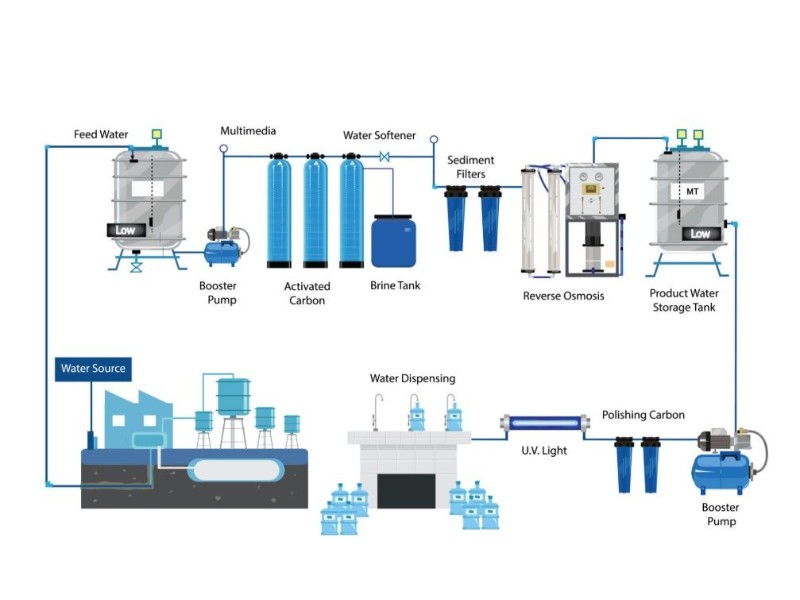
- For this reason the water is first softened through sand, activated carbon and softening filters.
- In final rinses, deionised water prepared with membrane or resin systems is used.
- The conductivity of the rinse water should also be monitored regularly.
What is electrolytic colouring?
- Electrolytic colouring deposits metal salts at the bottom of the pores after anodizing.
- The process is mostly run in tin-based baths with alternating current.
- As time increases, the colour darkens from light bronze to black.
- The colours obtained are resistant to light and weather.
- For colour consistency, bath composition, temperature, time and voltage must be kept constant.
What causes burning in anodizing?
- Burning is damage to the coating caused by current concentrating in one area.
- The most frequent causes are poor rack contact and high current density.
- Insufficient agitation and high bath temperature also raise the risk.
- Unbalanced loading of the rack prevents the current from spreading evenly.
- To solve it, contact points, current settings and bath agitation should be checked together.
How should racking be done in anodizing?
- The profile has to be fixed to the rack tightly and conductively; loose contact causes burning and uncoated areas.
- Aluminum or titanium is used as rack material.
- Contact points should be chosen on the non-visible faces of the profile.
- Rack load should be calculated according to rectifier capacity and tank size.
- The angle of the profiles should also let the solution drain easily when leaving the tank.
What does rinse water conductivity indicate?
- Conductivity helps monitor the ionic load in the water and is an indicator of rinsing performance.
- On its own it does not show which contaminant is present or whether the surface is completely clean.
- Acceptance limits should be set according to the requirements of the relevant process; water change and feed management should follow from that.
Does the stripping process affect profile dimensions?
- Substrate loss can also occur during coating stripping and re-preparation of the surface.
- Especially close-tolerance fit surfaces and thin walls should be re-evaluated.
- The decision to rework should be made only after dimensional checks and the product’s service conditions are verified.
Why should mechanical surface preparation before anodizing be standardized?
- Differences in brushing, grinding and polishing conditions can be reflected in the final surface appearance.
- Abrasive type, processing direction and equipment condition should be defined for the same product group.
- Using a reference sample helps reduce appearance differences between shifts and batches.
How does cathode placement affect the coating in anodizing?
- The placement and operating condition of the cathodes contribute to the current distribution across the load.
- Rack position, profile geometry and bath circulation should be evaluated together.
- Coating distribution should be verified by measuring different regions; a single-point result is not sufficient.
Why is drainage important on parts with enclosed cavities?
- Solution trapped inside can be carried into subsequent baths and later cause leakage or staining.
- Part design, racking orientation and, if necessary, drainage openings should be evaluated together.
- If the design is to be changed, the part’s mechanical and functional requirements must be preserved.
Mechanical Operations, Packaging and Production Management
What are the benefits of using aluminum in the automobile industry?
- The widespread use of aluminum, thanks to its low specific gravity and high strength, can result in a weight reduction of approximately 300 kg in a mid-class car. This ratio corresponds to 30% of the total weight of the vehicle. (Fuel saving)
- 95% of the aluminum used in the automotive industry is collected and recycled. The scrap value of these materials is over 50% of their normal values. (Cost savings)
- Aluminum material is resistant to corrosion from water and road salts, even if it is unpainted or uncoated.
- Galvanizing, coating or painting may not be necessary for aluminum, which is necessary for steel on non-visual parts and incurs additional cost.
- Aluminum is resistant to corrosion and rust like steel in case the paint is scratched or removed.
- Like some plastic materials, it does not become brittle as a result of desert heat, northern cold or UV rays.
Why is the aluminum material surface brushed?
- Eliminating extrusion lines.
- Reducing mold cooling marks.
- Reducing weight loss in caustic etching.
- To obtain a more homogeneous surface appearance.
What is springback in bending and how is it managed?
- Springback is the partial return of the profile to its old shape when the bending force is removed.
- Its amount changes with alloy, temper and wall thickness; a hard profile springs back more.
- For this reason the profile is bent slightly beyond the target angle.
- Forming in a soft temper and ageing afterwards also reduces springback.
- Setting up with a trial part is recommended for every new lot.
How is the thermal break assembled?
- Knurling: Teeth are cut into the inner face of the strip groove.
- Strip insertion: Polyamide strips are slid into the grooves of the inner and outer profile.
- Rolling: Discs press the groove lips onto the strip and lock the joint.
- Testing: The shear strength of the joint is measured.
- The groove dimension also has to be within tolerance, and polyamide strips should be stored in a dry place.
Which tests define quality in aluminum?
- Mechanical strength tests: Tensile, yield and fracture values are measured.
- Chemical analysis: A spectrometer verifies that the alloy meets the standard.
- Hardness test: It shows whether heat treatment was applied correctly.
- Surface and coating tests: Anodic layer thickness, paint adhesion, impact and salt spray tests.
- Dimensional control: Conformity of dimensions with EN standards and the drawing is checked.
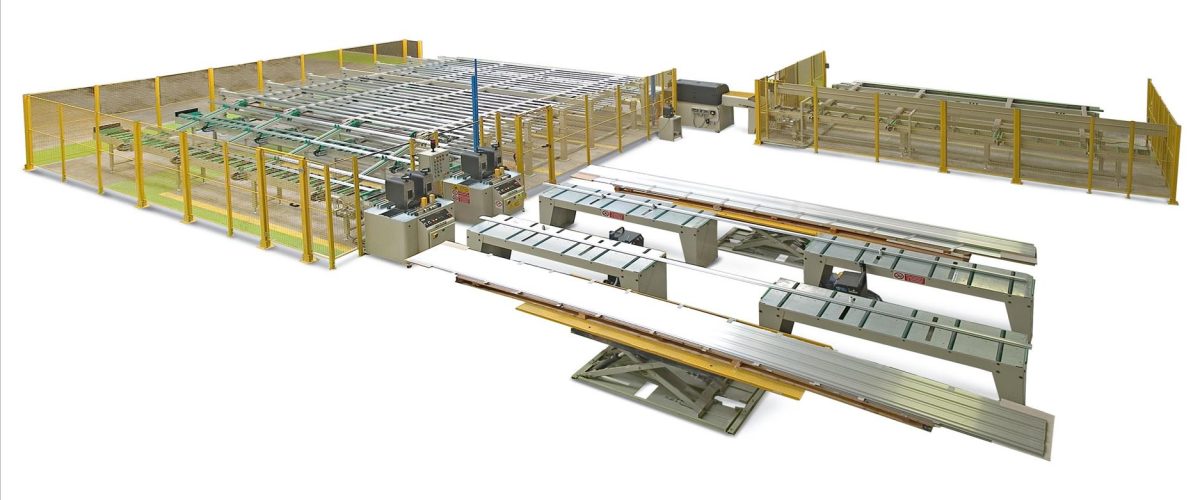
Which saws are used for cutting aluminum profiles?
- Single-head saw: Used for straight and mitre cuts to length.
- Double-head saw: Cuts both ends of the profile at the same time and at the required angle; common in window production.
- Automatic cutting lines: They feed, measure and cut by themselves in series cutting.
- Blade selection matters; the number and geometry of the teeth must suit aluminum.
- Lubrication and correct clamping also give a clean, burr-free cut face.
Which standards define profile tolerances?
- In Europe, the dimensional and form tolerances of extruded profiles are defined by EN standards.
- EN 755-9 covers general-purpose profiles.
- EN 12020-2 gives tighter tolerances for precision profiles in alloys 6060 and 6063.
- Section dimensions, straightness, twist and angle tolerances are included in these standards.
- If a tighter tolerance than the standard is needed, it must be stated clearly on the drawing and agreed with the supplier.
What decides the minimum order quantity?
- For standard stock profiles the quantity is usually set by pack or by number of lengths.
- For profiles that need a special die, the die cost and the smallest economical press run are decisive.
- In surface treatment, rack and bath lot sizes also enter the calculation.
- For special-colour powder coatings, the smallest powder package affects the quantity.
- For this reason the unit cost is higher for small orders.
How is clamping deformation reduced when machining thin-walled profiles?
- Clamping force, contact area and support points should be chosen to suit the profile’s stiffness.
- A dimension that looks correct while the part is clamped may change once it is released.
- First-article inspection should also be done in the free state; a fixture with wider support should be used if necessary.
What does built-up chip formation on the cutting tool lead to?
- Material adhering to the cutting edge can ruin surface quality and dimensional stability.
- Cutting speed, tool geometry, sharpness and lubrication conditions should be examined together.
- Changing the tool alone may not be sufficient; chip removal from the cutting zone should also be checked.
What should be checked if the cutting fluid leaves stains on the profile?
- The concentration of the fluid, water quality, usage time and dwell time on the surface should be examined.
- Compatibility of the material with the fluid and its effect on subsequent surface treatment should be verified by trial.
- The cleaning and drying method should be defined to match the product’s appearance requirements.
How is the acceptance criterion for deburring determined?
- Sharp edges, assembly surfaces and visible areas are evaluated according to the product’s use.
- Deburring must not cause dimensional loss or unnecessary edge rounding.
- A reference sample, magnified inspection or a defined measurement method can ensure consistency between shifts.
How is scratching of profiles inside a bundle prevented?
- Friction between profile surfaces is reduced with suitable separator material and a proper fastening arrangement.
- Cleanliness of the separators, movement of the packaging and sharp ends should be checked.
- The bundle design should be validated not only in the warehouse but under real transport conditions as well.
What does the humidity rate depend on in polyamide heat barriers?
Since polyamide material is moisture-retaining in terms of structure, it absorbs the moisture in its environment. If the amount of humidity in the body is more than 2%, the assembly will be adversely affected. In addition, as the moisture evaporates during paint curing, bubbles occur on the paint layer on the wick. The main reasons for this problem are as follows.
- Relative humidity in the environment
- Ambient temperature
- Waiting time in the environment
- Thickness of the roving (profile)
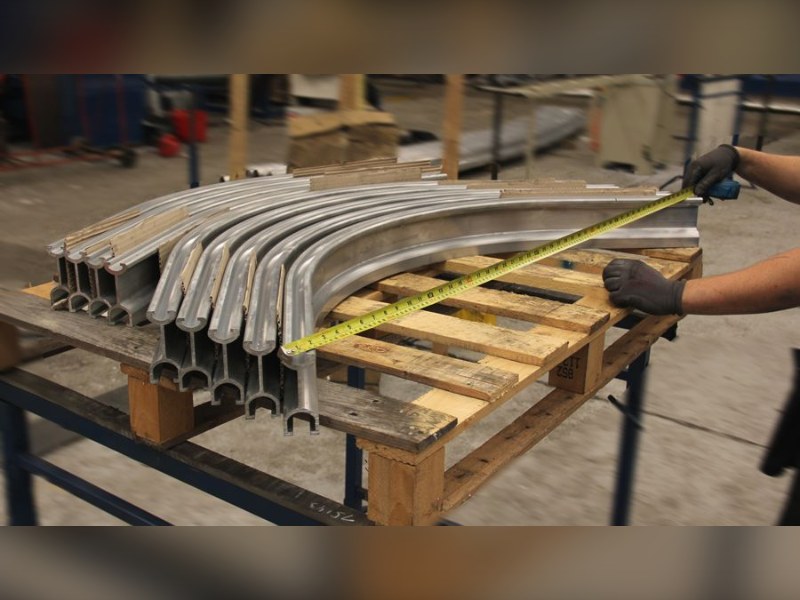
What are the methods for bending aluminum profiles?
- Stretch bending: The profile is stretched and wrapped over a die; springback is reduced.
- Roll bending: Three rolls curve the profile step by step; suitable for large radii.
- Rotary draw bending: Preferred for small radii and precise bends.
- Push (free-form) bending: Gives variable radii on the same part.
- In short, the method is chosen according to radius, section and production volume.
Why do burrs form in CNC machining and how are they prevented?
- Aluminum is soft and tends to smear on the cutting tool.
- A dull tool, wrong speed and feed, and weak clamping increase burrs.
- Therefore sharp tools with wide flutes, suitable for aluminum, should be used.
- Chips also have to be removed quickly from the cutting zone.
- Remaining burrs are removed by brushing, chamfering or vibratory deburring.
How should aluminum profiles be packed?
- Visible faces should be separated with protective film or interleaving paper.
- Spacers should be placed between profiles so that no rubbing marks occur.
- Strapping must be tight, but it must not crush the profile.
- The pack has to be protected against moisture, because trapped moisture stains the surface.
- Every pack should also carry a label with order, profile and quantity information.
Which factors affect aluminum prices?
- LME prices and global commodity trends set the real-time value of the metal.
- Energy prices: Production consumes a lot of energy; electricity and natural gas costs are reflected in the price.
- Dollar and euro exchange rates are decisive, especially for importers and exporters.
- Raw material and scrap supply and the continuity of the supply chain affect the price.
- Geopolitical risks and trade policies (customs duties, quotas) cause sharp movements.
- Demand in sectors such as construction, automotive and energy also steers the price.
What should be considered when welding aluminum?
- The oxide layer on the surface should be removed just before welding.
- Oil, moisture and dirt cause porosity, so the part has to be dry and clean.
- The filler wire should be selected to match the alloy of the base material.
- In heat-treated alloys, strength falls in the zone around the weld; the design has to take this into account.
- On parts that will be anodized, the weld seam can also appear in a different colour.
What is traceability and why is it important?
- Traceability means being able to show with records which cast, press and surface treatment lot a product came from.
- Every pack receives a label or barcode carrying the lot information.
- When a complaint arrives, the source of the problem is found quickly.
- Other affected packs are also identified, which avoids unnecessary recalls.
- In sectors such as automotive, traceability is a customer requirement.
Why does a condensation stain occur during storage?
- Moving cold metal into a warm and humid environment can cause condensation on the surface.
- Moisture trapped inside the bundle that cannot escape increases the risk of staining and corrosion.
- Storage conditions and transitions between environments should be planned; damp product should not be placed directly into closed packaging.
How is the stacking height of profile bundles determined?
- Bundle weight, profile stiffness, spacer placement and floor load capacity are evaluated together.
- The load from upper bundles must not crush or permanently bend the bottom row.
- The stacking limit should be set by a validated packing and occupational safety plan, not by general habit.
What does OEE measure in aluminum production?
- Overall Equipment Effectiveness tracks effective equipment use through the availability, performance and quality components.
- Results cannot be compared when planned time, ideal cycle time and product definitions are not clear.
- OEE alone is not an indicator of profitability or of the whole plant’s capacity; it must be evaluated together with the reasons for losses.
How can die changeover and colour change times be reduced?
- Preparations are divided into tasks that can be done while the machine is running and tasks that must be done during the stop.
- Completing tooling, material and cleaning preparation in advance reduces waiting time.
- Safety steps and first-article quality checks must not be skipped when shortening the time.
Why is first article approval taken before serial production?
- The first article is inspected to confirm that the setup conforms to the technical drawing and process requirements.
- Critical dimensions, surface properties and relevant process parameters are recorded.
- Continuing serial production before a non-conformance is corrected can cause the same defect to repeat across many parts.
Curing Control with Thermograph
Do you measure the real curing temperature in powder coating?

Colour Shade Differences in Powder Coating
Why do colour shade differences occur in aluminum powder coating?