Aluminum Extrusion Consultancy
Technical consultancy for extrusion plant set-up, press productivity and profile quality.
What do we do in extrusion consultancy?
First of all, the press line is the heart of a profile factory. However, productivity does not depend on press speed alone. For example, the die, the billet temperature and the cooling conditions also affect the result directly. Therefore, Aluminum Doctor supports you through the whole process, from plant set-up to solving technical problems.
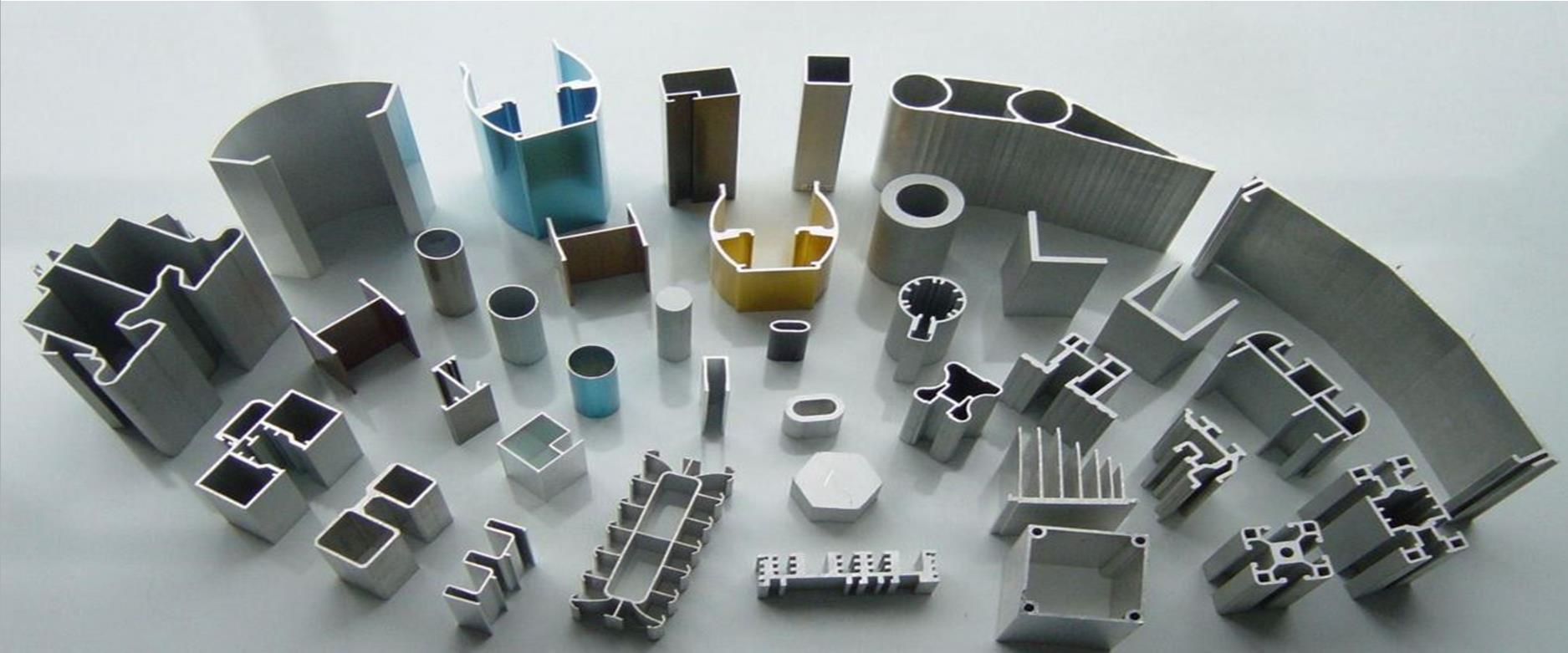
Extrusion plant set-up and equipment selection
First, we define the product range you want to produce and your target capacity. Then we specify the press tonnage, the furnaces and the auxiliary equipment accordingly. In addition, we prepare the layout plan to match the material flow. As a result, you can base your investment decisions on numbers.
Extrusion productivity and profile quality
In existing plants, we first measure dead time, scrap rate and press speed. After all, you cannot improve a process that you do not measure. In particular, mechanical values suffer when profile cooling is not done correctly. For this reason, we also examine the cooling and aging conditions. Finally, we report the improvement with measurable values.
Do you have questions?
List of frequently asked questions to help you understand how extrusion presses work.
What is the dead time in extrusion presses? How is it calculated?
One of the most important factors in manufacturing efficiency in extrusion presses is dead time. Dead time is defined as the time remaining outside the time when the billet turns into profile during the production of the press. In other words, it can be described as the time that passes during the execution of auxiliary movements.
In the calculation of the dead time, the measurement starts when the previous print is finished, that is, when the pressure drops to zero. The measurement is terminated when the next billet is loaded into the hive, completing the venting process and reaching the maximum pressure. The value read is expressed as the dead time of the press.
What is the extrusion speed? How is it calculated?
Although it does not have a clear definition in the literature, it is the process of converting the raw material to profile per unit time. Generally, it is calculated with 4 different methods. These ;
- By measuring the punch speed per unit time (mm / sec).
- By measuring the profile speed (m / min) per unit time.
- By measuring the amount of net production (kg / h) achieved per unit time.
- It is calculated by measuring the amount of gross raw material (kg / h) consumed per unit time.
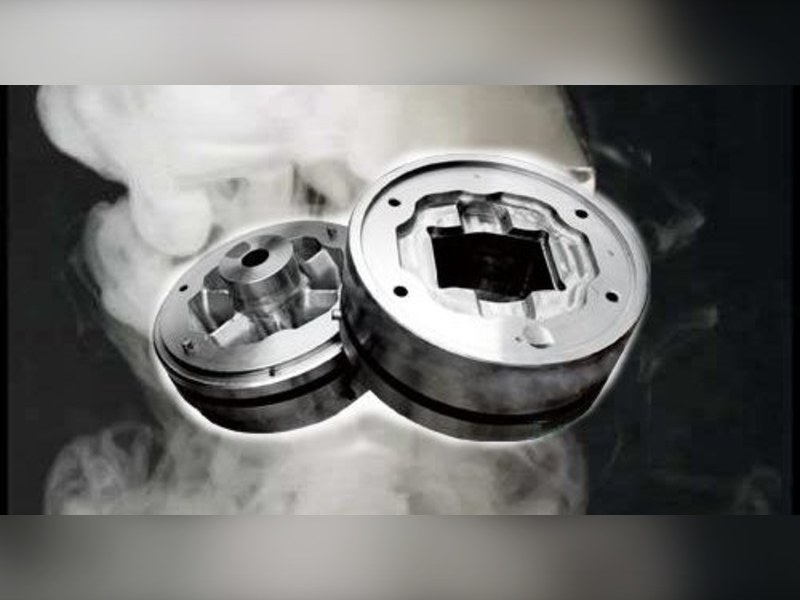
What is extrusion die? According to what is it classified?
It is the equipment used to obtain the desired cross-sectioned product during the extrusion process. There are two main types of dies. These;
Solid dies.
Bridge dies.
What is extrusion? How many types of extrusion methods are there?
It is the process of shaping the metal placed in the mold, which is produced depending on the desired shape, by forcing it to flow with high compression force. It can be compared to squeezing toothpaste from a toothpaste tube. Basically, there are 2 different extrusion methods. These;
- Direct Extrusion
- Indirect Extrusion
What are the purposes of die preheating?
The main purposes of preheating the dies before the extrusion process are as follows.
Extension of die life.
Ensuring flow balance and reducing the amount of scrap.
Preventing the billet from sticking to the die surfaces.
What are the aluminum extrusion process steps?
Aluminum billets are heated up to 400 – 500 °C.
After the billet reaches the desired temperature, the lubricant is transferred on it as a thin film. It will prevent the die and material from sticking together due to heat.
The ticket is transferred to the carrier.
Billet logs are pushed.
Aluminum billet billets, which are larger than the die, are crushed by the opposite die while in full contact with the load-bearing walls. As the aluminum is pushed through the die, liquid nitrogen flows around the die to cool the process.
In some cases, nitrogen gas is used instead of liquid nitrogen.
As a result of the pressure, the billet starts to come out by being squeezed out of the cavity of the aluminum die.
During the extrusion process, the temperature is instantly measured and recorded. The purpose of knowing the temperature is to be able to maintain maximum pressure velocities.
During the drawing of the extrusion, the extrusion outlet is done by a series of fans along the cooling length.
The oxidized part on the billet log is discarded.
When the extrusion reaches the desired length, the extrusion profile is cut with the help of a saw.
The metal is transferred on the cooling table.
After the aluminum is moved along the table and cooled, the aluminum is subjected to hardening and alignment processes.
The extrusion is transferred to a stretched saw blade and cut into certain lengths.
In the aluminum extrusion process, according to which parameters is the heating temperature of the billets determined?
- The cross-sectional shape of the profile to be produced,
- Extrusion rate,
- The type of extrusion die,
- The force required for extrusion (power of the press),
- The desired mechanical properties of the product,
- The desired surface quality of the product.
What are the benefits and harms of heating the billet to high temperature in the aluminum extrusion process?
Benefits;
- It simplifies the extrusion process.
Harms;
- It negatively affects the surface appearance,
- It causes the mold to wear out quickly,
- Causes roughness and lines on the product surface,
What information is needed when ordering aluminum extrusion profile?
- Is there a technical drawing? (must include alloy, weight, tolerance, visible surface, etc.)
- Which international standards will it be produced according to?
- What is the order size?
- What is the end-use length?
- What is the estimated annual usage amount?
- What is surface information? (pressing, powder coating, anodizing, machining, hanger trace etc.)
- What is the packing information? (form of packaging, foil etc.)
How is aluminum profile size control done?
- During the extrusion production of the profile, a sample piece is cut with a saw.
- Cut part burrs are cleaned.
- The profile surface is scanned with the scanning device.
- The measurement is compared with the profile technical picture in the device memory.
- Weight control is done on sensitive scales.
- In this way, deviations in the profile and thickness measurements can be made easily.
What should be the ideal mold temperature in the aluminum extrusion process?
Dies need to be heated before extrusion. The relevant value should be a temperature 50-60 C below the solution temperature.
Low mold temperatures cause the following nonconformities. These ;
- It causes clogging of the extrusion profile die.
- It causes the press pressure to rise and causes the die to break.
- Deviations occur in aluminum profile dimensions.
- It causes loss of production due to prolongation of production time.
- It causes oil leaks due to oil heating.
- The speed is too low, resulting in cooling failure and subsequent problems in thermal processes.
What is the extrusion rate? How is it calculated?
It is the ratio between the billet area used in the extrusion process and the cross-sectional area of the profile obtained. Start with a phrase;
Extrusion Rate = Billet area / Profile area
When the extrusion rate is low, little mechanical work will be done on the portions of the shape containing the largest metal mass. Its metallurgical structure will approach the casting (coarse grained) state. This structure is mechanically weak. Shapes with less than 10 extrusion rates may not be guaranteed for mechanical properties.
The opposite is the case when the extrusion rate is high. More pressure is required to push the metal through smaller openings in the die and excessive friction occurs. Normally acceptable extrusion rates are limited to 35 for hard alloys and 100 for soft alloys. The normal extrusion rate range is 10 to 35 for hard alloys and 10 to 100 for soft alloys.
These limits should not be considered absolute, as the actual shape of the extrusion can affect the results. The higher the extrusion rate, the more difficult the part will be to extrud as a result of the increased resistance to metal flow. Maximum pressure is required for the extrusion of hard alloys.
What is die annealing? What non-conformities does it cause?
It is the heating of the molds before the extrusion process. The respective temperature should be 50-60 degrees below the solubilization value. Some inconveniences caused by low mold temperatures are as follows.
- It causes mold clogging.
- If the die is cold, aluminum does not flow. Continued printing causes the pressure to rise, resulting in the die breaking.
- Profile size deviations occur in filled profiles.
- It creates inefficiency due to the prolongation of production time.
- Surface quality will be low.
- It causes the oil temperature to increase and equipment damage. Therefore, it causes oil leakage.
- It causes a decrease in printing speed, cooling defects, and therefore not achieving the desired hardness in thermal process.
How are heat treatment applications classified in aluminum alloys?
Heat treatment applied to aluminum alloys can be applied in different ways and the applied process is written next to the alloy number with TX symbols. These operations are expressed as follows:
O: Annealed, F: As produced, H: Hardened, T: Heat treated.
• T1: Cooled after hot shaping process and left to naturally age.
• T2: Cooled after hot forming, cold formed and naturally aged.
• T3: Solution taken, cold formed and left to naturally age.
• T4: The solution was taken and naturally left to age.
• T5: Cooled after hot shaping and artificially aged.
• T6: Solution treatment has been done and artificial aging has been done.
• T7: Solution was taken and over-aged.
• T8: Solution treated, cold formed and artificial aging.
• T9: Solution treated, artificially aged and cold formed.
• T10: Cooled after hot forming, cold formed and artificial aging.
What is a bubble? What are the main reasons?
It is one of the types of errors that occur during the extrusion process. It is the general definition given to the defects seen as air gaps on the product obtained. The main reasons are as follows.
- Lack of bleeding system or bleeding at wrong pressure.
- Part billet usage.
- The hive temperature is not suitable.
- Billet temperature is not suitable.
- Failure to clean oxide, oil and metal residues accumulated in the hive.
- The amount of search is not ideal length.
- Excessive lubrication of the cutting blade, punch, sleeve at the end of extrusion.
- Hot cutting process does not cut smoothly.
- Die, barrel and punch axes are not in proper position.
- The intermediate cutting blade creates air gaps by emptying the die ports.
- Incorrect dummy block design.
- Hive liner is damaged.
- There is an air gap in the raw material.
- Inappropriate die design.
What are the main causes of surface line defect on aluminum profiles?
One of the defects that occur on the surfaces of aluminum profiles after the extrusion process is the surface lines. The main reasons for the related error are as follows.
- Die surface defects caused by Wire Erosion Cutting.
- Cutting tool traces in the die pre-pool.
- Incorrect pass length.
- Improper nitration.
- High billet temperatures.
- Improper printing speed.
- Surface defects inside the hive (core).
- Not using homogeneous raw materials (billet).
- Faulty graphite material used in the exit stand.
- Unsuitable transfer belts.
- Inappropriate intermediate (stock) distance.
What is nitration and why is it done?
After pressing in extrusion dies, abrasions occur on the die surface.
These abrasions cause roughness on the profile surfaces after extrusion. With the help of the compound layer formed after the nitration (Tenifer) process, the surface is more resistant to abrasion, reducing roughness and extending the maintenance intervals of the molds. It is made with 3-5% cyanide and 37% cyanate salts at 570-580 °C.
What are the benefits and harms of heating the billet to low temperature in the aluminum extrusion process?
Benefits;
- Provides good surface quality,
- It provides good mechanical values.
Damages;
- It complicates the extrusion process,
- It causes the press pressure to increase and the hydraulic oil to heat up,
- It causes damage to the mold by being under more pressure.
What information is needed when ordering aluminum extrusion profile?
- Is there a technical drawing? (must include alloy, weight, tolerance, visible surface, etc.)
- Which international standards will it be produced according to?
- What is the order size?
- What is the end-use length?
- What is the estimated annual usage amount?
- What is surface information? (pressing, powder coating, anodizing, machining, hanger trace etc.)
- What is the packing information? (form of packaging, foil etc.)
Why is die heating done in the extrusion process?
The purposes of the heating process applied to the dies in the extrusion industry are as follows.
- Reducing the risk of early die damage,
- Reducing the amount of scrap at the beginning of production where there is an unstable metal flow,
- To prevent the billet from sticking.
How does the staker (stacker) used in the production of aluminum profiles work?
The staker used in the production of aluminum profiles is usually designed as a machine and is located at the end of the production line. Staker is used to collect the produced aluminum profiles in bulk.
The working principle is generally as follows: When the process is finished, the carrier system at the end of the production line transfers the aluminum profiles to the staker. Staker is integrated into the carrier system and automatically recognizes the profiles transmitted by the carrier system.
Staker has a double chain drive mechanism. These mechanisms can operate at several different speeds to control and properly stack the profile stack. Two chain drives carry the aluminum profiles with them and move them upwards. As the profile stack rises, the staker mechanism moves to the other side, making room for the top profile stack.
The Staker is usually controlled by a touchscreen or other controller. These devices are used to adjust the staker’s running speed, profile stacking order and other parameters.
In conclusion, the staker is an automatic device used in the production of aluminum profiles. This device collects the produced profiles in a heap and works with high efficiency.
Comparison of electrical conductivity of aluminum and copper.
The most preferred material in electrical transmission is copper. However, the advantages of aluminum also pave the way for it to be preferred in electrical transmission.
The conductivity of aluminum is 39% lower than that of copper. On the other hand, aluminum is 70% lighter and significantly cheaper than copper. That is, an aluminum wire with the same electrical resistance is twice as light as a copper wire.
What is thermal (artificial aging)?
It is the process of hardening the aluminum alloy by subjecting it to a certain time and temperature. Not all alloys will react the same to artificial aging.
In order for the process to give a healthy result, the previous process must be carried out under appropriate conditions. For example, the desired result cannot be obtained after the raw material without proper casting process and extrusion (mold temperature, billet temperature, extrusion exit temperature, etc.)
Aluminum Doctor has the knowledge and experience to meet your extrusion needs.
Understanding your needs and goals is important to us. We listen to you to achieve your goals and work together to create different experiences.
You can write to us about your extrusion problems.
Other Services
Would you like to see our other activities that will highlight your business?
Access our current shares
Stay up to date by reading articles written by our industry experts on extrusion.
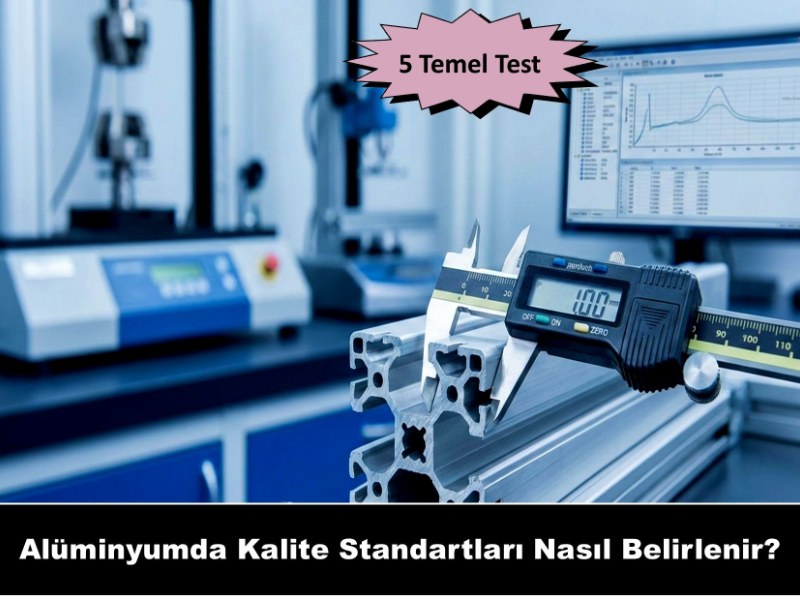
5 Tests That Define Quality Standards
The 5 key tests that define quality standards in aluminum.

Cooling Rate in Aluminum Profile
How to Determine the Ideal Cooling Rate in Aluminum Profile Production?